The Wider Classroom: Designing UK Workplace Training for Neurodivergent Employees
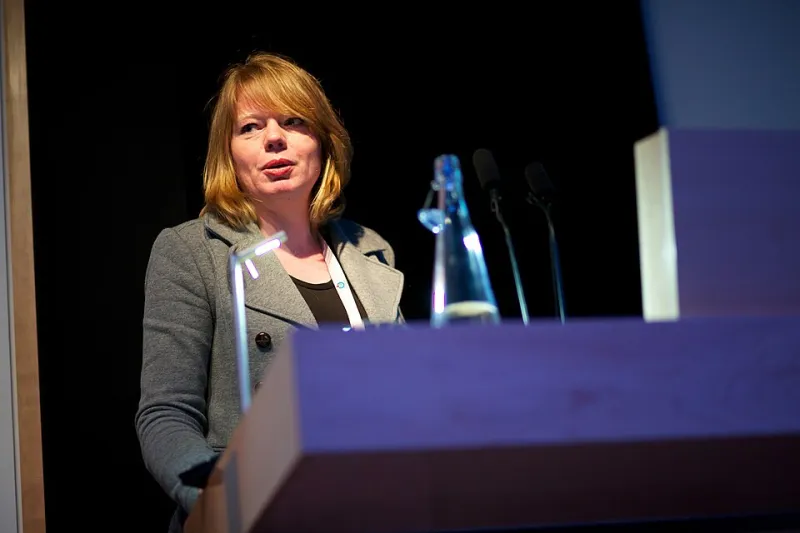
Photo: Digits.co.uk Images, CC BY 2.0, via Wikimedia Commons
Training is frequently designed around an imagined learner: someone who listens for an hour, takes notes in the same way as everyone else, thinks quickly on their feet and demonstrates competence under timed pressure. Real workplaces are wider than that. A substantial minority of UK employees process information, sustain attention or communicate in ways that do not fit the default model. For employers, the practical question is not whether to create a separate programme for neurodivergent staff. It is how to design ordinary training well enough that more people can use it.
An inclusion issue, and a quality issue
Neurodiversity-inclusive learning is sometimes treated as a niche compliance topic. That framing undersells it. Clear objectives, structured sessions, accessible materials and flexible assessment are simply good training design. They help the dyslexic learner who needs the slides in advance, the autistic employee who benefits from an agenda and predictable breaks, the person with ADHD who finds long passive segments difficult, and the colleague who is simply tired, new to the subject or joining remotely.
UK employers also have a legal context to keep in view. The Equality Act 2010 requires reasonable adjustments in a range of circumstances, and training is part of working life. But the strongest argument for inclusive design is not legal risk management. It is that training budgets are wasted when capable people cannot access the learning. In 2026, with hybrid working and tighter development budgets, that is a practical concern rather than an abstract one.
Start with clarity, not content
Before revising a slide deck, revise the promise of the course. What should a participant be able to do afterwards? What will they be asked to demonstrate? What does good performance look like? Share these outcomes at the start, in writing and verbally, and return to them at the end.
A simple running order helps more than many trainers expect. Provide an agenda with approximate timings and state where breaks will fall. Explain whether questions are welcome throughout or gathered at set points. For hybrid sessions, say how remote participants should signal that they want to contribute. None of this is elaborate. It reduces the uncertainty that can make an otherwise manageable session exhausting.
Structure sessions to reduce unnecessary load
Long uninterrupted presentation is a weak format for most learners. Break content into shorter segments, signpost each transition and repeat the key message in more than one form. A verbal explanation followed by a written summary and a short practice task is more robust than a single dense explanation.
Build in processing time. When asking a question, allow a few seconds of silence before inviting answers; not everyone composes a response at the same speed. Avoid cold calling as a default participation method. If the aim is to check understanding, use a quick written poll, a paired discussion or a short reflective task instead. These alternatives still generate evidence of learning without turning the room into a test of reaction speed.
Consider the sensory environment too. Bright fluorescent lighting, background noise, crowded seating and back-to-back activities can make concentration harder. A quieter room, clear signage, predictable break times and permission to move or step out briefly are low-cost adjustments that often benefit the whole group.
Make materials do more of the work
Materials should support the session rather than duplicate it. Use plain English, consistent headings and generous white space. Keep slides uncluttered and avoid long paragraphs. Provide the deck or a structured handout in advance where possible, along with any pre-reading. For recorded content, captions and transcripts are now routine expectations rather than premium extras.
A glossary of acronyms and technical terms is particularly useful in regulated or specialist sectors. So is a one-page checklist of the key steps in a process. These are not crutches; they are job aids that help people transfer learning back to the workplace. If a participant needs to concentrate on listening rather than copying diagrams, giving them the diagram in advance is sensible design.
Rethink participation and group work
Group activities often assume that everyone is comfortable speaking spontaneously, maintaining eye contact and negotiating a role in an unstructured discussion. Offer more than one route into the task. Participants might contribute in writing, through a pair discussion, via a chat function or by feeding points to a nominated spokesperson. Assign roles clearly rather than leaving groups to sort it out.
Role-play can be valuable, but it can also create unnecessary exposure. Where the learning objective allows, use case studies, written scenarios or observed practice in smaller pairs. Give people notice of what they will be asked to do, and make the purpose of the activity explicit. The goal is to practise the skill, not to perform confidence.
Assess competence, not speed
Assessment should measure whether someone can apply the learning, not how quickly they can decode a question. Make criteria clear in advance. Use a mix of methods — short written answers, practical demonstrations, structured observations, multiple-choice checks followed by discussion — rather than relying on one format. Allow reasonable extra time where needed and provide feedback privately.
Timed tests can be appropriate for certain safety-critical or technical competencies, but they should be justified. If speed is not part of the standard, do not make it an accidental barrier. Equally, inclusive assessment does not mean lowering the standard. It means giving people a fair route to demonstrate the same standard.
Close the loop through evaluation
Ask participants what helped and what got in the way. A short anonymous question at the end of a course — 'Which part of the session made learning easier or harder?' — will surface practical issues that a satisfaction score misses. Review materials and timings regularly. Avoid requiring staff to disclose a diagnosis in order to request an adjustment; many reasonable changes can be offered to everyone as part of standard course design.
A short checklist for the next course
- Send an agenda, outcomes and materials in advance.
- Chunk content and signpost transitions.
- Offer participation in more than one format.
- Provide written summaries and job aids.
- Build in breaks and processing time.
- Make assessment criteria explicit.
- Ask for anonymous feedback on barriers.
Inclusive training is not a separate track bolted onto the main programme. It is the main programme, designed with more care. For UK employers, that is both a quality improvement and a straightforward way to make limited training time go further.